Es gibt keine Website-Inhalte zu Ihrer Suchanfrage.
Website-Inhalte
Sie haben sich erfolgreich abgemeldet.


Gefäßkatheter-assoziierte Infektionen
Bei der Versorgung und Behandlung der Patienten sind Gefäßkatheter von großer Bedeutung. Sie sind wichtig für die Gabe von Medikamenten und Infusionen. Auf der anderen Seite stellen sie ein Infektionsrisiko dar, da Mikroorganismen durch die Punktion in die Haut eindringen und zu lokalen Infektionen führen können. Aber sie gelangen auch in die Blutbahn und verbreiten sich so hämatogen, bis hin zur Entstehung einer primären Sepsis.
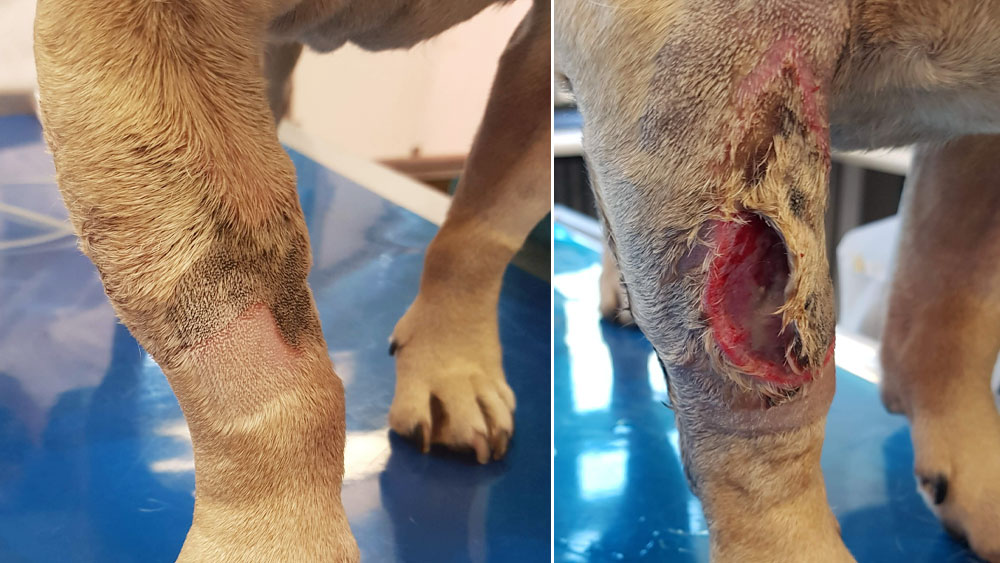
In der Humanmedizin machen Septikämien mit positiver Blutkultur ca. 10 % aller nosokomialen Infektionen aus. Dabei sind intravaskuläre Katheter direkt oder indirekt ursächlich an der Sepsis beteiligt und mit einer Sterblichkeitsrate von 25 % verbunden.1
In der Tiermedizin gibt es deutlich weniger Daten zu diesem Thema. Die Komplikationsrate für periphere Venenkatheter (PVC) liegt bei bis zu 46 %2 und für die zentralvenöse Katheter (ZVK) bei 39 %3. Dabei unterscheidet man zwischen mechanischen oder entzündlich/infektiösen Komplikationen. Die Phlebitis ist dabei eine der häufigsten Komplikationen. 4 Ursachen einer solchen Phlebitis können mechanisch, chemisch oder infektiös sein. 5 Eine bakterielle Besiedelung von Kathetern in der Tiermedizin ist ein großes Problem und wird mit 15 %-39,6 % in der Literatur beschrieben. Zum Teil waren in 46 % der positiven Kulturen multiresistente Erreger nachweisbar.2,6-9
In der Humanmedizin wurden periphere Venenkatheter lange in der Betrachtung als Ursache einer Sepsis außer Acht gelassen, da das Risiko deutlich niedriger ist als beim ZVK. Allerdings ist die Anwendungsrate deutlich höher, sodass die Anzahl an vermeidbaren Katheter-assoziierten Septikämien vermutlich dennoch groß ist.
Die ICRI oder Sepsis wird dann manifest, wenn die Erreger Zugang zur Katheterspitze gefunden haben. Diese können sie prinzipiell über die äußere Katheteroberfläche oder durch das Katheterlumen erreichen.10
Die häufigsten Ursachen sind Brüche in der Asepsis beim Legen des Katheters und beim Handling, wie z. B. Wechseln von Infusionsbesteck oder die Gabe von Medikamenten. In der Humanmedizin wird empfohlen, die Patienten an die Infusion anzuschließen und diese als geschlossenes System bis zu 96h zu belassen. Mit jeder Diskonnektion steigt das Risiko der Kontaminierung des Katheters. In der Tiermedizin ist ein häufiges Diskonnektieren an der Tagesordnung, da die tierischen Patienten das Infusionssystem nicht ohne großen Aufwand mit sich herumtragen können. Andere Ursachen können kontaminierte Medikamente, Kontamination an der Punktionsstelle durch Sekret oder Exkrete oder Kontamination durch ungeschützte Luer-Lock Verbindungen sein.11, 12
Auch hier wissen wir aus der Humanmedizin, dass durch gezielte Präventionsmaßnahmen sowie Fort- und Weiterbildungen die Infektionsraten gesenkt werden können.13
Eine gute Prozesshygiene beim Legen und im Umgang mit den Kathetern, der Infusionstherapie, Medikamentenzubereitung und deren Gabe spielen in der Prävention eine entscheidende Rolle.
Zugehörige Information
Gefäßkatheter-assoziierte Infektionen
Mehr erfahren


